Chris Feddersen
Testing in-store mobile payments — from lofi to validated in a single day
Kmart | 2024–2025 | PM, BA, Design x 2, Flutter Dev x 2
Overview
In 2024–2025, I designed three mobile payment concepts for Kmart's app, each tested directly with customers in-store. Two concepts were part of "value accelerator" sessions — rapid validation sprints where we tested lofi screens in the morning, iterated with devs, and re-tested refined designs the same afternoon. The third was tested separately with a similar approach.
These weren't about shipping features. They were about validating whether mobile payments could solve real friction points in the store.
Narrowing Down
We initially tested a broad range of ideas via unmoderated user testing sessions to narrow down on what customers felt was valuable. Some concepts were stakeholder favourites, others came from insights through our Continuous Discovery program.
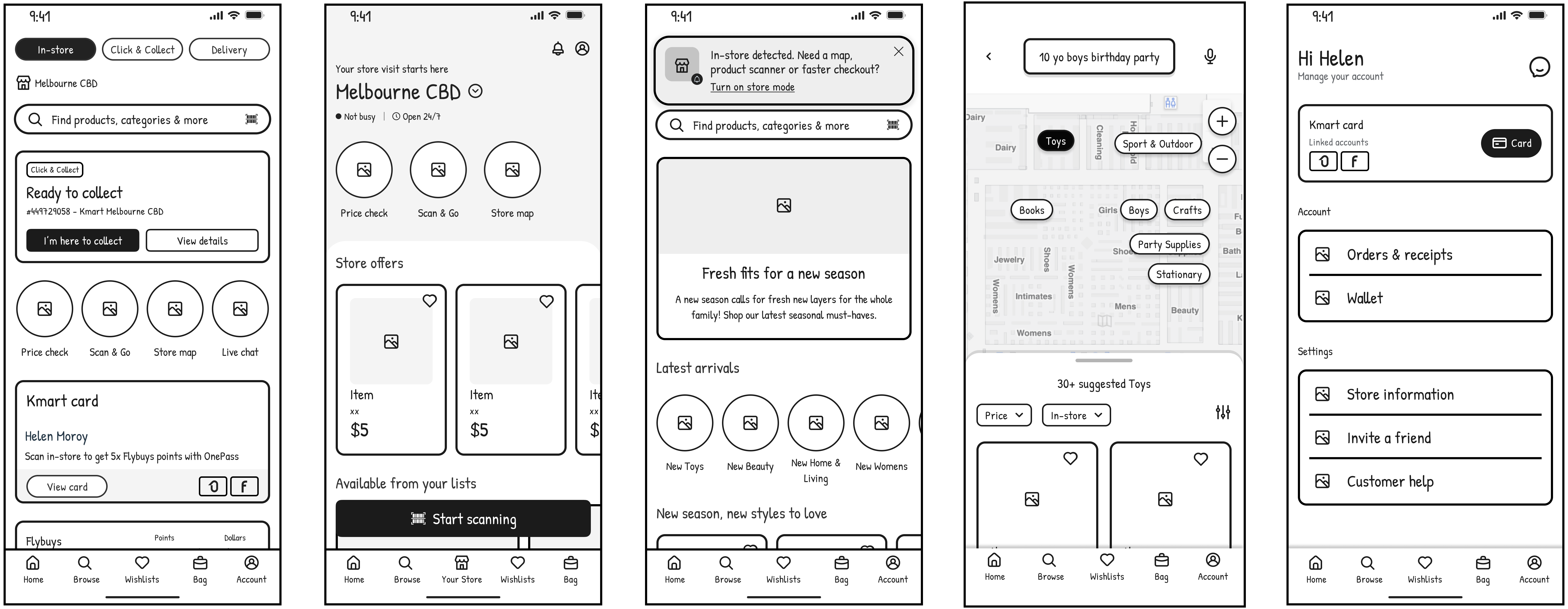
We tested the idea of a dedicated "Store" mode that surfaced in-store utilities like store maps and loyalty cards, in-store search by aisle, as well as exclusive store offers.
The Concepts
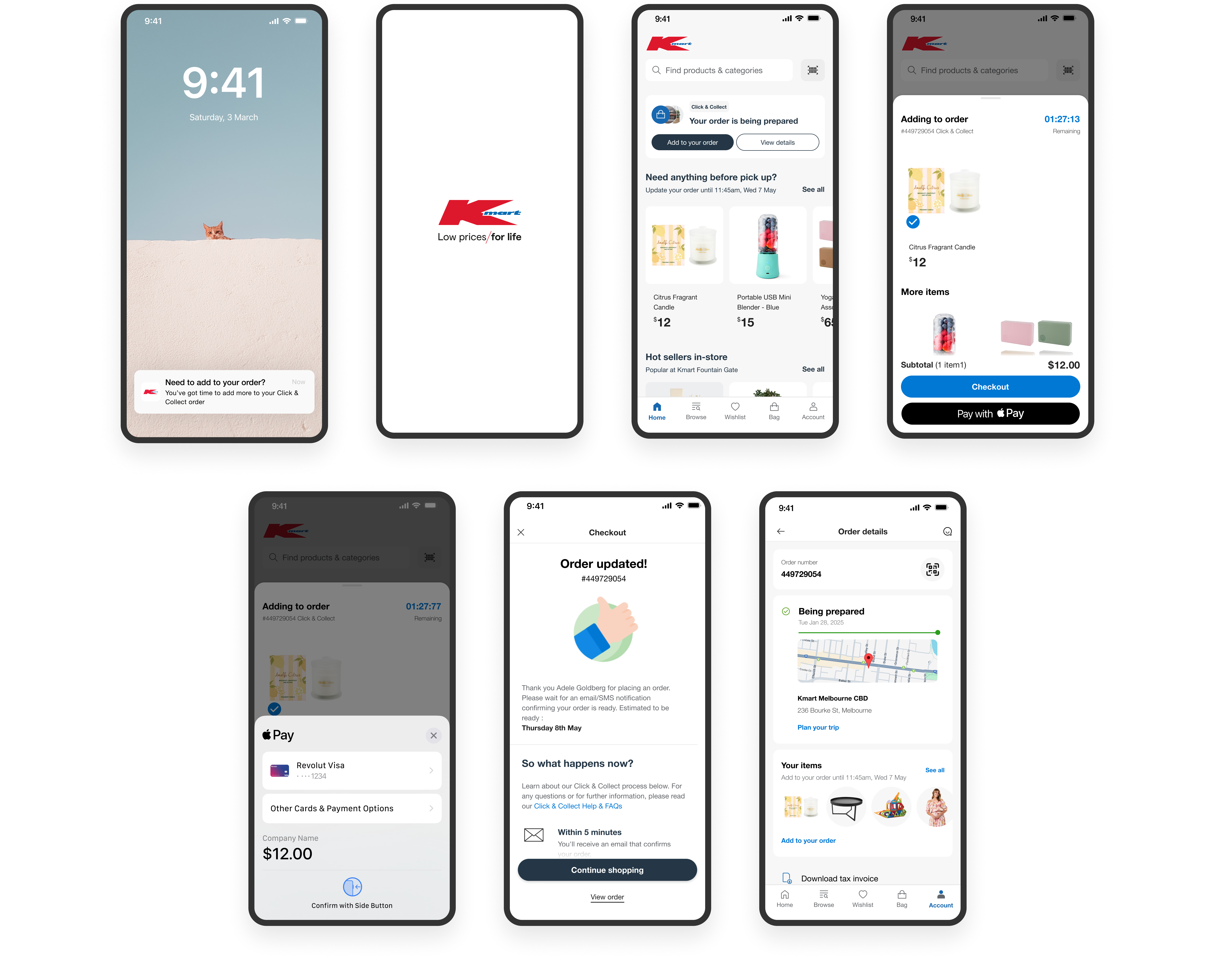
1. Add to Click & Collect
Your order is being prepared. Realise you need something else? Add it to your order, pay via Apple Pay, and it's ready when you arrive. No second trip, no queue.
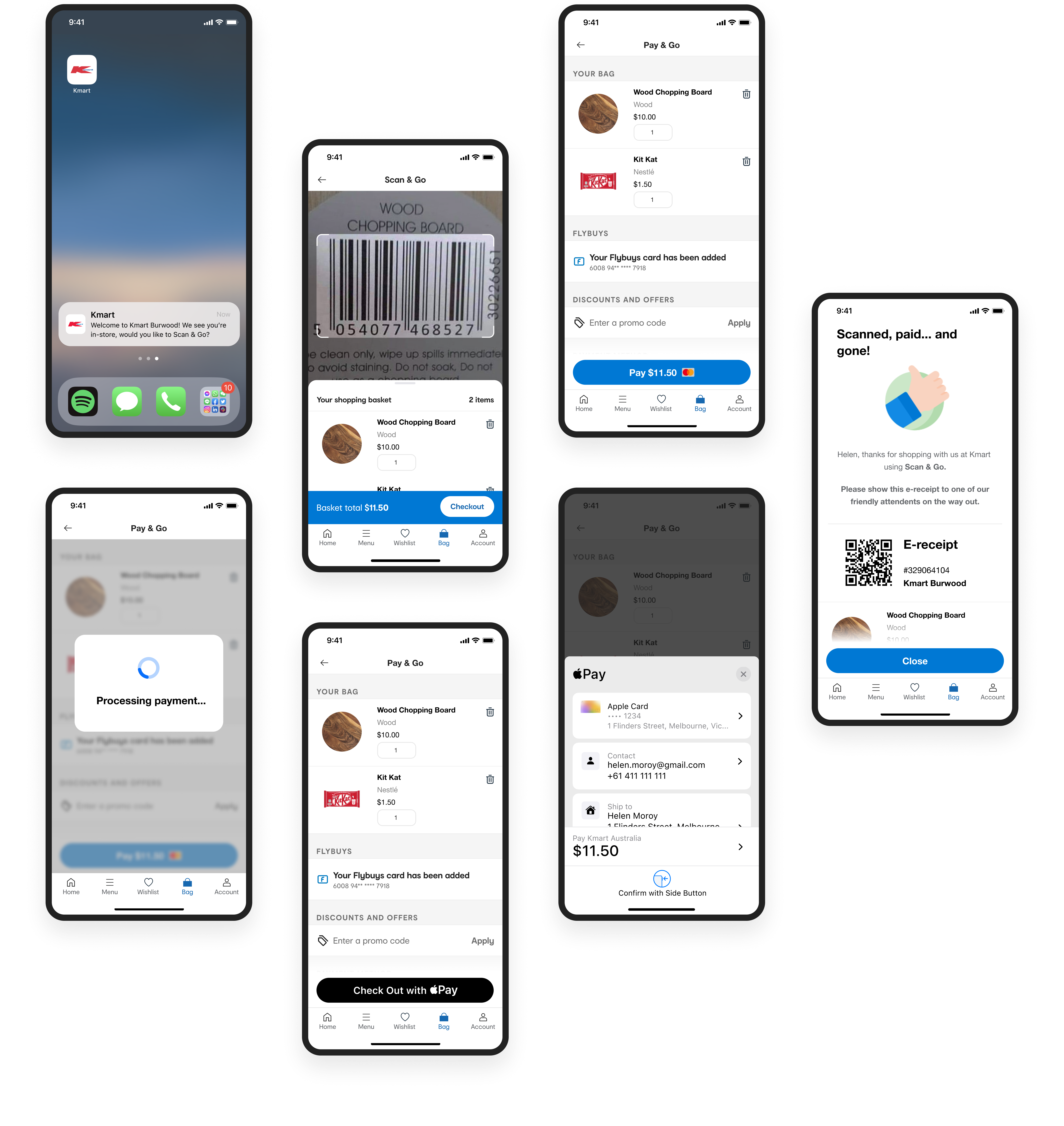
2. Scan & Go
Skip the checkout entirely. Scan items from the shelf, pay on your phone, show your e-receipt QR code on the way out.
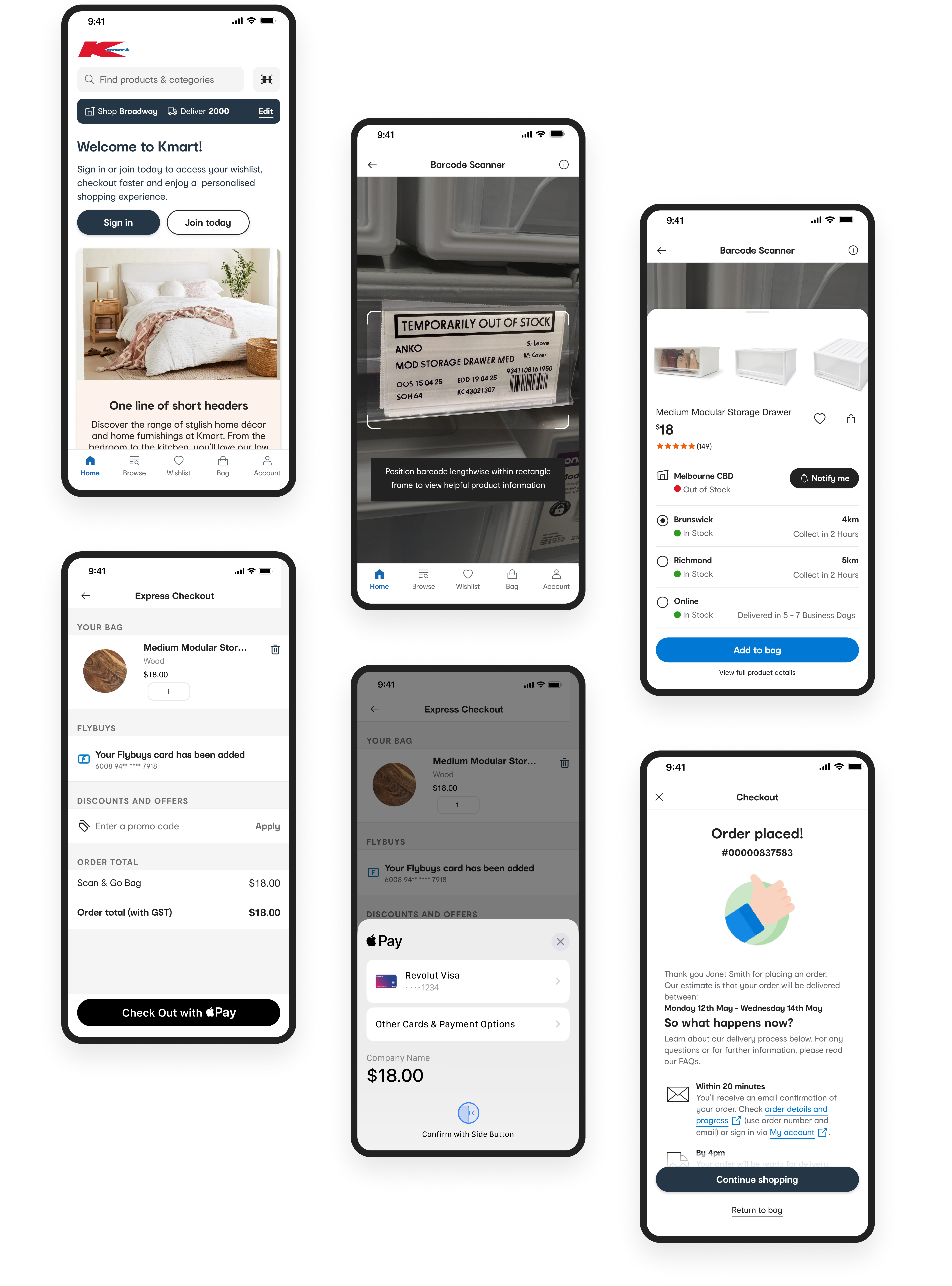
3. Out of Stock — Save the Sale
Empty shelf? Scan the OOS barcode and see your options: get it delivered from a nearby store, or pick it up later. Turns a lost sale into a save.
Process
Value Accelerator (Add to CnC, Out of Stock)
- Morning: Recruited customers in-store, tested lofi screens
- Midday: Regrouped with devs, identified friction, iterated designs
- Afternoon: Re-tested updated screens with fresh participants
- Outcome: Concept validated or invalidated in a single day
Devs were embedded throughout — not waiting for handoff, but actively problem-solving with design.
Scan & Go
Tested separately with a similar rapid validation approach.
What I Did
- Led end-to-end design for all three concepts
- Created flows and screens from lofi through to high-fidelity
- Facilitated in-store user testing sessions
- Iterated designs in real-time based on customer feedback
- Partnered with developers to assess feasibility during sessions
Key Learnings
- Multi-language support is essential — One of our first testers needed Hindi translation. Accessibility isn't optional for a mass-market retailer.
- Holding a phone while handling products is awkward — A trolley or basket cradle could help. Using your phone in-store works better for smaller, lower-value items you can carry out.
- For larger items, buy in-store, pick up on exit — Customers were open to purchasing via the app but preferred collecting items at the door rather than carrying them through the store.
What I'd Do Differently
Testing in live stores is valuable but introduces variables — busy periods, distracted customers, store layout differences. I'd push for more controlled first-round testing before going in-store, then validate in the real environment.